

Your Essential Pool Opening Steps to Get Swim-Ready This Season
Following a comprehensive pool opening checklist is essential for Ottawa homeowners preparing their backyard pool for another summer season. Opening your pool correctly ensures safe water, properly functioning equipment, and helps you avoid expensive repairs throughout the swimming season. Here’s everything you need to know about getting your pool ready.
Key Takeaways
- Cover Removal – Remove your pool cover carefully after clearing debris and draining standing water to prevent contamination.
- Equipment Startup – Reinstall drain plugs, prime the pump, and backwash the filter before starting your circulation system.
- Shock and Balance – Shock the pool water immediately, then test and balance pH, chlorine, and alkalinity levels.
- Circulation Time – Allow water to circulate for 24 hours before testing chemistry again to ensure proper balance.
- Swim-Ready Targets – Your pool is swim-ready when pH reaches 7.2-7.8, chlorine measures 1-3 ppm, and alkalinity stays between 80-120 ppm.
Removing Your Pool Cover and Cleaning
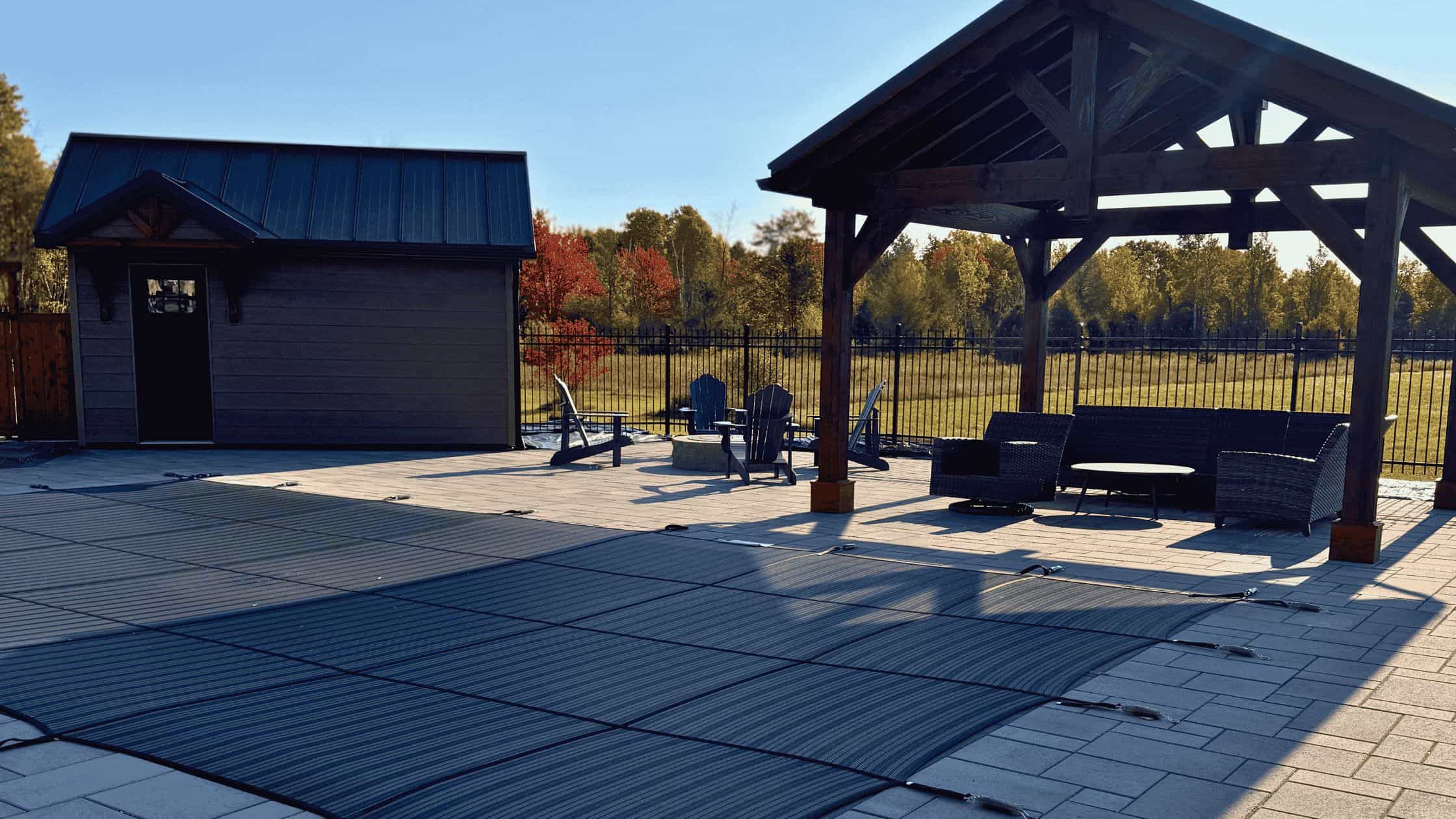
Before enjoying crystal-clear water, the first step in your pool opening checklist is to properly remove and clean your pool cover. Start by clearing debris with a skimmer net, then use a submersible pump to remove standing water on top. This prevents contamination when you lift the cover.
Carefully remove the cover, ensuring no debris falls into your pool. For standard tarp covers, clean them with mild soap and allow them to dry completely before folding and storing to prevent mildew. Safety covers require brushing and rinsing to remove debris, plus thorough drying before storage. Remember to lubricate all cover anchors for easier installation next season.
Once the cover is removed, inspect your pool for cracks or mould. Address any damage before cleaning and refilling your pool.
Refilling and Starting Your Equipment
With your cover removed and pool cleaned, the next step in your pool opening focuses on getting your circulation system running properly.
Before starting the equipment, follow these steps:
- Remove all winterizing plugs and reinstall drain plugs on your filter and pump
- Prime your pump by filling it with water to prevent an airlock and ensure proper startup
- Turn on your system and backwash sand filters for 2-3 minutes
- Rinse for 30 seconds before switching to “filter” mode
- Check all connections and fittings for leaks while the system runs
Wait before starting your heater. You’ll need a licensed gas fitter to inspect it first, ensuring safe operation and regulatory compliance. This professional inspection protects your investment and family safety.
Shocking and Treating Your Water
Once your circulation system has run for several hours, shock your pool water at dusk or in the evening – this prevents sunlight from degrading the chlorine before it can work. Because Ottawa Home & Garden installs steel wall and vinyl liner pools, it’s important to use the right shock product: dichlor or liquid chlorine are the safest options for vinyl liners. If using calcium hypochlorite (cal-hypo), always pre-dissolve it completely in a bucket of water before adding it to the pool – undissolved granules that contact the liner directly can cause bleaching and premature liner damage. This critical step in the pool opening checklist lays the foundation for healthy water all season.
Consider using a pool opening kit that includes algaecide, a stain-and-scale remover, and clarifiers to balance water chemistry and prevent algae growth.
After shocking, follow these steps:
- Test your water chemistry by checking total alkalinity, chlorine levels, pH, and calcium hardness
- Target total alkalinity between 80 and 120 ppm
- Target pH between 7.2 and 7.8
- Target chlorine between 1 and 3 ppm for safe swimming conditions – for vinyl liner pools, aim for the lower end of this range (1 to 1.5 ppm during regular maintenance) to reduce the risk of liner bleaching over time
- Allow water to circulate for at least 24 hours before testing again
- Make additional adjustments as needed to achieve optimal water quality
Testing and Adjusting Chemistry Levels
After shocking your pool, test and adjust your water chemistry to create a safe swimming environment. This pool opening checklist task ensures comfortable, balanced water.
Follow these testing and adjustment steps:
- Test pH levels for optimal swimmer comfort and effective chlorine performance
- Check chlorine levels. For vinyl liner pools, target 1 to 1.5 ppm for regular maintenance – staying near the low end of the 1-3 ppm safe range helps preserve your liner and prevent premature bleaching
- Test total alkalinity, which acts as a buffer for pH levels
- Keep alkalinity between 80 and 120 ppm to stabilize pH and improve water clarity
- Test your water chemistry every few days to maintain balanced conditions
- Use sodium bicarbonate to raise alkalinity or muriatic acid to lower pH levels when making adjustments
Regular testing ensures your pool stays safe and inviting throughout the swimming season.
When Your Pool Is Swim-Ready
Your pool is ready for swimming when water chemistry reaches safe levels: pH between 7.2 and 7.8, chlorine between 1 and 3 ppm, and alkalinity between 80 and 120 ppm.
These balanced levels prevent skin and eye irritation. For additional guidance on keeping your family safe around the water, review Health Canada’s swimming safety guidelines. And now, you’re ready to enjoy your backyard oasis.
To maintain your pool throughout the summer, follow these maintenance tasks:
- Test water every few days using test strips or a test kit for accurate readings
- Skim the surface daily to remove leaves and debris, preventing them from sinking and causing problems
- Vacuum weekly to prevent algae buildup and maintain water clarity
- Check and clean your filter according to manufacturer guidelines, typically every few weeks
- Monitor water levels regularly and refill as needed to keep water halfway up the skimmer
Regular maintenance ensures proper circulation, prevents clogs, and keeps your pool water crystal clear all season long.
Frequently Asked Questions
- When should I open my pool in Ottawa?
Open your pool in Ottawa between late April and early June, ideally when daytime temperatures consistently stay above 15°C. Many homeowners aim to finish before the May long weekend to maximize their swimming season. - How long does it take to complete a pool opening?
Most pool openings take approximately one hour for a straightforward opening. This includes removing the cover, reinstalling equipment, starting the system, and ensuring everything is running properly. Additional time may be needed depending on the type of cover, the pool’s condition after winter, and any water balancing or chemical adjustments required to restore the pool to ideal swimming conditions.
- Do I need a professional to open my pool in Ottawa?
Many Ottawa homeowners complete basic pool opening steps themselves, but a professional is recommended for gas-heater inspections, which require a licensed gas fitter. If you’ve seen our work and read reviews, your equipment hasn’t been serviced recently, or you’ve had issues with water chemistry in past seasons, a professional opening can save you time and prevent costly repairs.
Ready for Summer Swimming
Once you’ve completed the steps from the pool opening checklist, you’re set for a fantastic swimming season.
Ottawa Home and Garden is Ottawa’s family-owned inground pool installation specialist, serving Ottawa, Kanata, Barrhaven, Orleans, Nepean, Stittsville, and the surrounding communities since 1998.
Whether you need guidance on pool chemistry or full-season poolscaping support, our in-house team handles it all with no subcontractors. Call us at 613-833-2645 or reach out to our team online to get started. See our work and read reviews from Ottawa families who’ve enjoyed their pools for years.